What Podiatrists Say About Hammertoe: Non-Surgical vs Surgical Options?
If you’ve been dealing with toe pain, stiffness, or a bent toe that just won’t straighten, you might be facing hammertoe, a condition that’s more common than most people realize. Seeing a podiatrist in Ridgecrest early can make a real difference in how your treatment goes. Whether you’re still in the early stages or the deformity has progressed, understanding what a foot specialist actually recommends and why helps you walk into that appointment with confidence. This guide breaks down exactly what the best podiatrist would tell you about your options, both non-surgical and surgical.
What Exactly Is Hammertoe?
Hammertoe is a deformity where one or more of the smaller toes bend abnormally at the middle joint, causing them to curl downward instead of lying flat. It usually affects the second, third, or fourth toe and can develop gradually over time due to muscle imbalance, tight footwear, or underlying conditions like arthritis or diabetes.
There are two types:
- Flexible hammertoe The toe can still be straightened manually. This stage responds well to conservative treatment.
- Rigid hammertoe The joint has stiffened and can no longer be moved. This usually requires surgical correction.
Catching it early is key. A podiatrist in Ridgecrest will first determine which type you have before recommending any path forward.
What Non-Surgical Treatment Actually Looks Like?
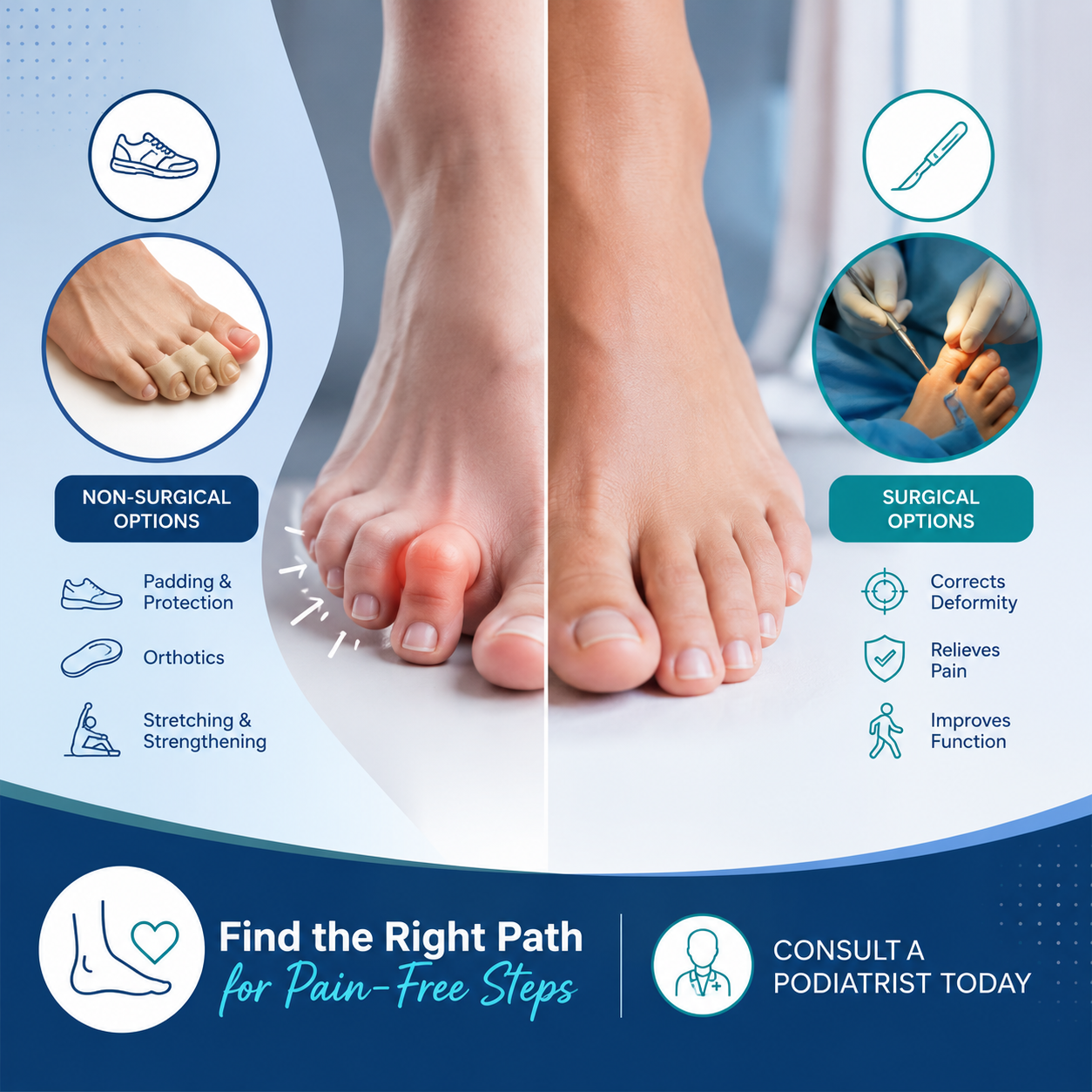
Most foot specialists will exhaust non-surgical options before ever mentioning surgery especially if the hammertoe is still flexible. Here’s what conservative care typically includes:
- Footwear changes Switching to shoes with a wider toe box and lower heel reduces pressure on the bent joint. This alone can slow progression significantly.
- Padding and splinting Toe pads or splints help reposition the toe and relieve friction from shoes.
- Custom orthotics These are shoe inserts prescribed specifically for your foot structure to redistribute pressure and address the underlying muscle imbalance.
- Stretching and physical therapy Specific exercises strengthen the muscles around the affected toe and improve flexibility.
- Anti-inflammatory medication Over-the-counter options or prescribed medication can manage pain and swelling during flare-ups.
- Cortisone injections For more acute pain, a localized injection can provide temporary relief while other treatments take effect.
The honest reality is that non-surgical treatment won’t reverse the deformity in rigid hammertoe. But in flexible cases, it can stop the condition from getting worse and keep discomfort manageable for years.
When Do Podiatrists Recommend Surgery?
Surgery becomes the conversation when conservative treatment stops working or the hammertoe has progressed to a rigid state. A podiatrist in Ridgecrest will typically recommend surgical evaluation if:
- The toe can no longer be straightened manually.
- Pain is persistent and affecting daily movement.
- Open sores or corns have developed from constant friction.
- Conservative methods have been tried consistently for several months without improvement.
What Hammertoe Surgery Involves?
There are a few different procedures depending on the severity:
- Tendon release or lengthening For flexible hammertoe, the surgeon releases the tight tendon, pulling the toe into a bent position.
- Joint resection (arthroplasty) Part of the joint is removed to allow the toe to straighten.
- Joint fusion (arthrodesis) The bones are fused together to correct a rigid deformity permanently.
- Pin fixation A temporary pin may be used to hold the toe in place while healing occurs.
Recovery varies based on the procedure, but most patients are walking in a surgical shoe fairly quickly. Full recovery typically takes several weeks, and your foot doctor will guide rehabilitation throughout.
Non-Surgical vs Surgical: How to Think About It
The decision really comes down to two things: how far the condition has progressed and how much it’s affecting your quality of life. Non-surgical care is always the starting point. It’s lower risk, doesn’t require downtime, and works well for many people in the early stages. Surgery delivers a more permanent fix for rigid or painful cases, but it comes with a recovery period, and realistic expectations need to be set.
What the best podiatrist will tell you is that neither path is one-size-fits-all. The right choice is based on your specific anatomy, lifestyle, activity level, and how long the condition has been developing.
Frequently Asked Questions
1. Can hammertoe go away on its own without treatment?
No. Hammertoe is a structural deformity that will not reverse on its own. Without intervention, it tends to worsen over time. Early conservative treatment can slow progression, but ignoring it typically leads to a more rigid and painful condition.
2. Is hammertoe surgery painful during recovery?
There is discomfort during the healing period, but it is generally manageable with prescribed pain relief and proper rest. Most patients find the recovery far more tolerable than the persistent daily pain they experienced before surgery.
3. How long does it take to recover from hammertoe surgery?
Initial recovery, where you can walk with a surgical shoe, typically takes a few weeks. Full recovery, including returning to regular footwear and normal activity, can take anywhere from six weeks to a few months depending on the procedure.
4. Can wearing the wrong shoes actually cause hammertoe?
Yes. Shoes that are too tight, too narrow, or have high heels force the toes into a compressed position over time. This muscle imbalance is one of the leading causes of hammertoe development.
5. How do I know if I need to see a podiatrist in Ridgecrest for my toe pain?
If your toe looks bent or curled, hurts consistently, has developed corns or calluses on top of it, or feels stiff and hard to move, those are clear signs to book an appointment. The sooner you’re evaluated, the more treatment options will be available to you.
Hammertoe doesn’t have to control how you move through life. Whether your situation calls for simple shoe changes and orthotics or a more definitive surgical fix, what matters most is getting a proper evaluation before the condition locks in. A podiatrist in Ridgecrest can assess exactly where you stand, explain your options clearly, and build a plan that fits your lifestyle. Don’t wait until walking becomes a daily struggle to reach out to a qualified foot specialist and take that first step toward lasting comfort and mobility.
